
FOR THE PURCHASING COORDINATOR
Order Pulse
A parts-tracking board that ends status chasing.
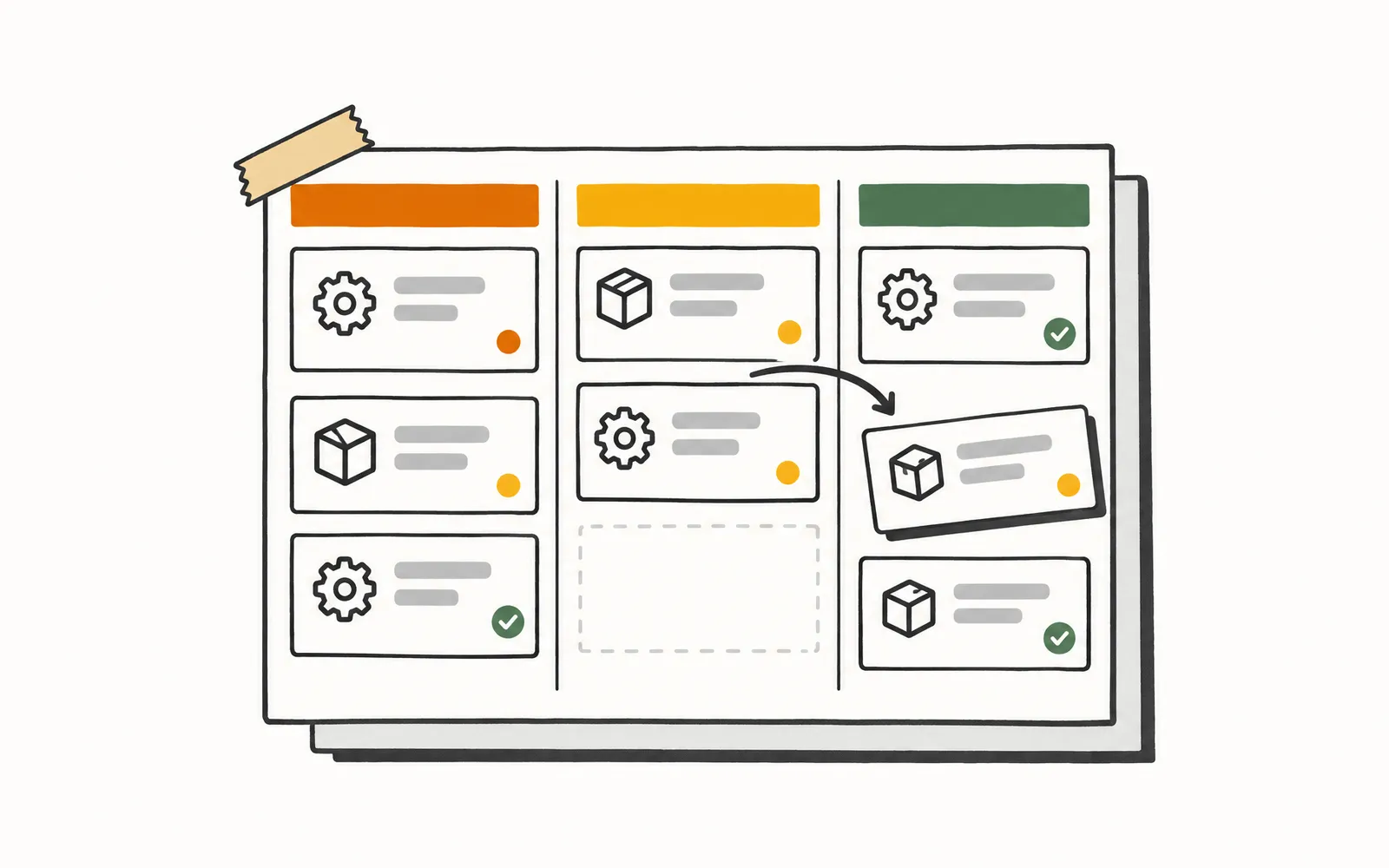
The status of every special-order part stays current on one board, without the Purchasing Coordinator holding a dozen vendor timelines in their head or digging through their inbox. " calls stop, because everyone who needs the answer can see it.
- Time back
- 10 min
- per item
- Cost
- 30¢
- 60 Rivets per item
How it works.
5 steps, and your team only touches the ones that need a person.
- 1.
Every part lands on the board
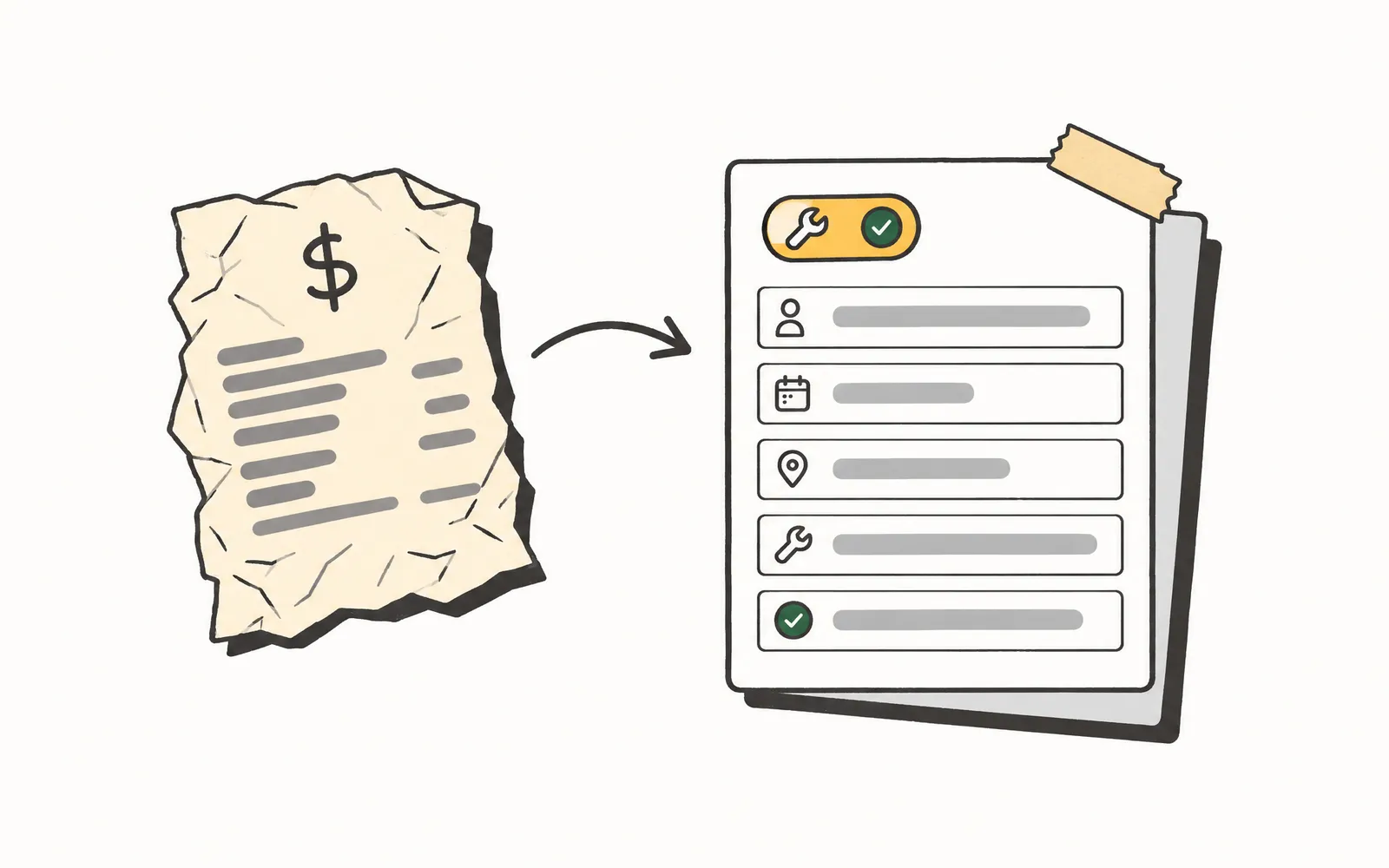
Special-order parts show up as cards from the existing order system, a spreadsheet upload, or a form the technician fills out from the job. Each card is linked to its job from the start.
- 2.
Each part moves through the same stages
A card moves from requested to ordered to shipped to picked up. The Purchasing Coordinator advances it, and everyone with access sees the change right away.
- 3.
Shipped parts track themselves
Once a part ships, the board stores the tracking number, pulls the carrier status, and flags any part running behind its expected arrival.
- 4.
Late parts get a follow-up call
When a part is past its expected arrival, an AI call agent follows up with the vendor and logs what it learns to the card, so the answer is there without anyone dialing.
- 5.
The right people are kept in the loop
As parts move, updates go to the office, the warehouse, and the technician over email and text, and the dispatcher is told when all of a job's parts are in.
Try it.
A small working model of Order Pulse. Nothing here touches a real customer.
Move parts from requested to picked up and see who gets told at each step.
A day for the Purchasing Coordinator.
- 7:30 AM
They print the open-order list because pen catches errors faster than the screen. A back-ordered coil for Thursday's install gets a star. That is the one that will eat their morning.
- 9:00 AM
While reviewing next week's jobs they get three texts and a call asking where parts are. They stop, look each one up, and answer them one at a time.
- 11:30 AM
A part they thought was on the way turns out to have shipped late. Nobody flagged it. They scramble to find a substitute before the job slips.
- 4:30 PM
They walk the open-order list one more time, email two reps for ETAs, and update their own expedite log so nothing falls through overnight.
- 7:30 AM
They open the board. Every special-order part is a card in its stage, and the late ones are already flagged at the top. The Thursday coil is among them, with a vendor follow-up already logged.
- 9:00 AM
They review next week's jobs without interruption. The technicians and dispatch can see part status themselves, so the calls do not come.
- 11:30 AM
The late shipment flagged itself this morning and the vendor was already called. They have the real ETA in hand and make the substitution decision early, before it threatens the job.
- 4:30 PM
The board is current because it updated itself all day. They check the handful of exceptions that need them and close the laptop.
What it won't do.
So nobody's surprised later.
- Does not place or modify purchase orders in the existing order system.
- Does not manage stocked-inventory levels, reorder points, or shelf replenishment.
- Does not negotiate with vendors or compare vendor pricing.
- Does not run purchase-order approval or accounting-code workflows.
- Does not reschedule jobs when a part runs late.
More for the Purchasing Coordinator.
- About 220,000 calls a month analyzed across 31 shops
- 139 shops use Graphite Lab tools
- 108 ServiceTitan data types synced, including for multi-location operators
- 66 to 93 mobile PageSpeed, from a contractor's old site to the preview we built in under 10 days
Let’s talk about your shop.
No slide deck. Tell us how your team runs today and we'll show you what we'd build first. If it's a fit, we send you a quote.