
FOR THE CSR
Queue Up
Arrival texts that quiet status calls.
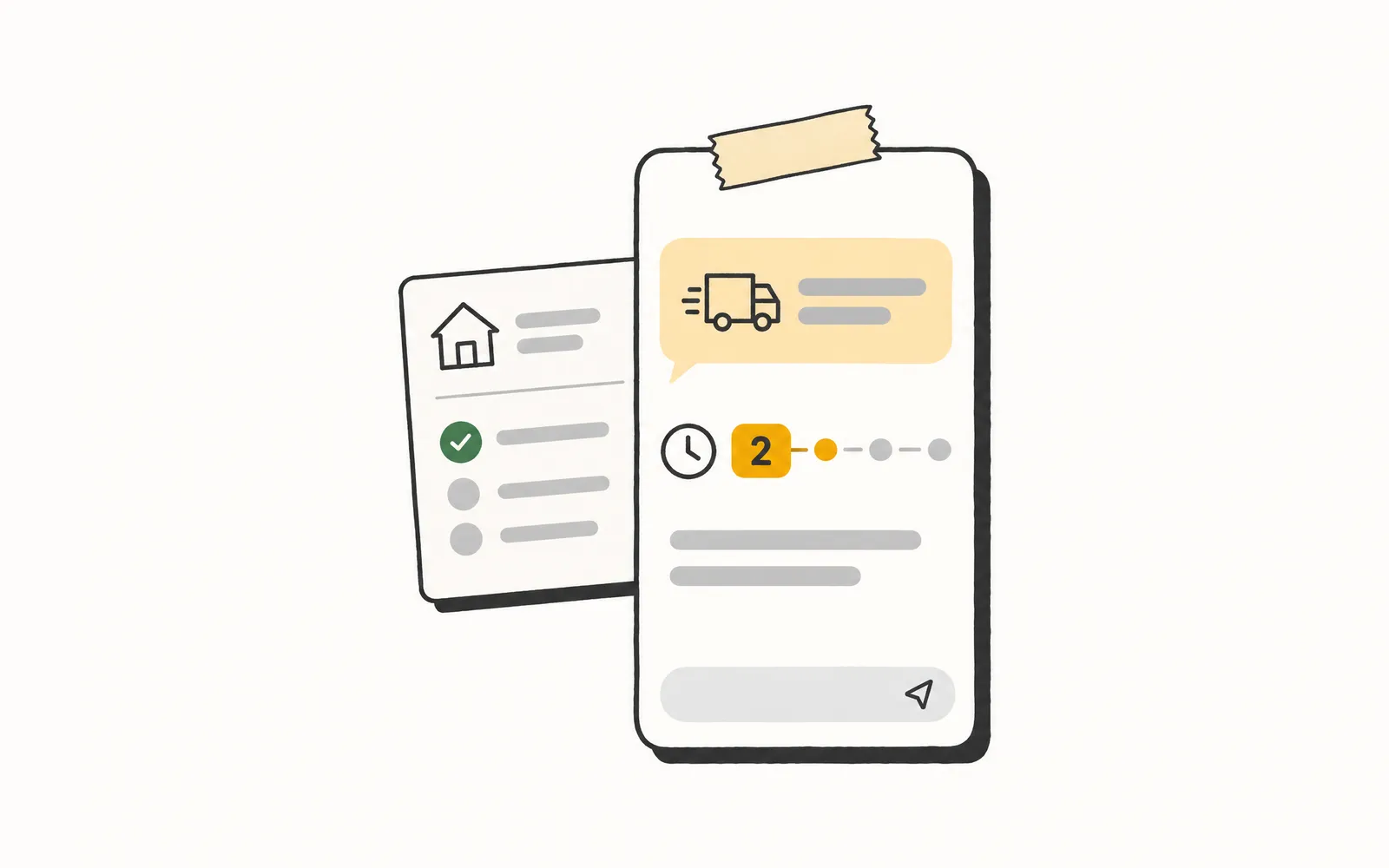
Every customer with a job today already knows where they stand before they think to pick up the phone. The CSR no longer relays arrival windows off the schedule, fields the same update again when a technician runs behind, or smooths over a missed visit that a heads-up would have prevented.
- Time back
- 5 min
- per job
- Cost
- 15¢
- 30 Rivets per job
How it works.
5 steps, and your team only touches the ones that need a person.
- 1.
The day's queue is sent
At the start of the day, each customer with a scheduled job receives a text with their place in the queue and an estimated arrival window.
- 2.
The queue stays current
As jobs are completed, added, rescheduled, or delayed, the queue updates and customers receive a fresh text reflecting where they now stand.
- 3.
Running ahead or behind triggers an alert
When a technician is running significantly ahead or behind schedule, affected customers receive an automatic heads-up before the window passes without warning.
- 4.
A text goes out before arrival
Shortly before the technician reaches the property, the customer gets a final text saying the technician is on the way, so they are ready at the door.
- 5.
The CSR stays out of it
Every text runs without the CSR sending it. They see the log; they do not manage it.
Try it.
A small working model of Queue Up. Nothing here touches a real customer.
Make Ben's first job run long or short and see how the texts to his next customers change.
A day for the CSR.
- 8:00 AM
First call of the day is a 'where is my tech?' The CSR checks the schedule, works out an estimated window, and relays it while the next line is already ringing.
- 9:30 AM
A technician runs behind on a job. Three customers call in the same window. Each one gets a manual update, and none of the callbacks were logged before the queue moved on.
- 11:00 AM
A customer missed the technician because the window passed without a heads-up. The CSR spends fifteen minutes smoothing it over and rebooking.
- 1:30 PM
Afternoon push. Status calls mix in with booking calls. Each one costs two to three minutes the CSR does not have.
- 4:00 PM
End of day. A third of the calls logged were status checks that required no action beyond relaying a time.
- 8:00 AM
Every customer with a job today received their queue position and arrival window before the office opened. The first calls coming in are bookings, not status checks.
- 9:30 AM
A technician runs behind. Affected customers receive an updated text automatically. No calls come in about it.
- 11:00 AM
A pre-arrival text goes out before each technician reaches the property. The customer is at the door. No missed arrivals logged today.
- 1:30 PM
Afternoon queue is bookings and real issues. Status calls are not in the mix.
- 4:00 PM
The CSR reviews the notification log. Every customer was touched, with nothing requiring a follow-up call.
What it won't do.
So nobody's surprised later.
- Does not call the customer. Every leg is a text, and there is no voice agent in this product.
- Does not handle inbound customer replies to the text notifications. The texts are one-way, so the pre-arrival text does not collect a confirmation or an access-issue response back.
- Does not reroute or reschedule jobs; notification timing adjusts to the schedule, not the other way around.
- Does not replace the CSR on calls that require judgment, booking changes, or complaint handling.
- Does not notify customers for jobs that were never on the day's schedule.
- About 220,000 calls a month analyzed across 31 shops
- 139 shops use Graphite Lab tools
- 108 ServiceTitan data types synced, including for multi-location operators
- 66 to 93 mobile PageSpeed, from a contractor's old site to the preview we built in under 10 days
Let’s talk about your shop.
No slide deck. Tell us how your team runs today and we'll show you what we'd build first. If it's a fit, we send you a quote.